
Winter Diary 2025 / 26
(Click on the images for a larger picture.
If you are viewing Country Eye on a Smartphone or Tablet the page layout
may not be as intended, please see Accessibility
. )
If it wasn't for the short daylight hours and bad weather, especially rain, winter would certainly be my favourite season of the year for birdwatching. In my part of eastern England winter affords the best opportunities to connect with wildfowl, birds of prey and passerines from northern Europe.
Coastal habitats can yield the most dramatic results with a good assortment of wildfowl and hunting raptors pretty much guaranteed. But if you can't get to the coast, you might be surprised at what turns up close to your doorstep. For example, a short walk around my village in late January produced an impressive list of birds. A flock of mixed finches included no less than 70 linnets feeding in a field drilled with a cover crop for green manure. The hedgerow bordering the field held redwings and continental blackbirds feeding on berries and both green and great spotted woodpeckers were exploring the tree trunks for insects.
During the autumn and winter many types of birds roost together for warmth and safety from predators. Starlings are famous for this of course and people will travel miles to see the aerial patterns as the birds change direction shortly before dusk, when they drop down into cover such as reedbeds to roost. These starling flocks and spectacles are known as murmurations. As if the spectacle wasn't sufficiently exciting, the addition of raptors; sparrowhawks, falcons or harriers harassing the birds certainly spices up the occasion.
Of course, starlings are not the only birds that roost communally during the winter months; many other passerines do the same. Insectivorous birds such as Pied Wagtails will roost in warmer areas such as glasshouse complexes and even tower blocks. Tiny Wrens will often roost together in blue tit nest boxes during cold weather to share their body warmth.
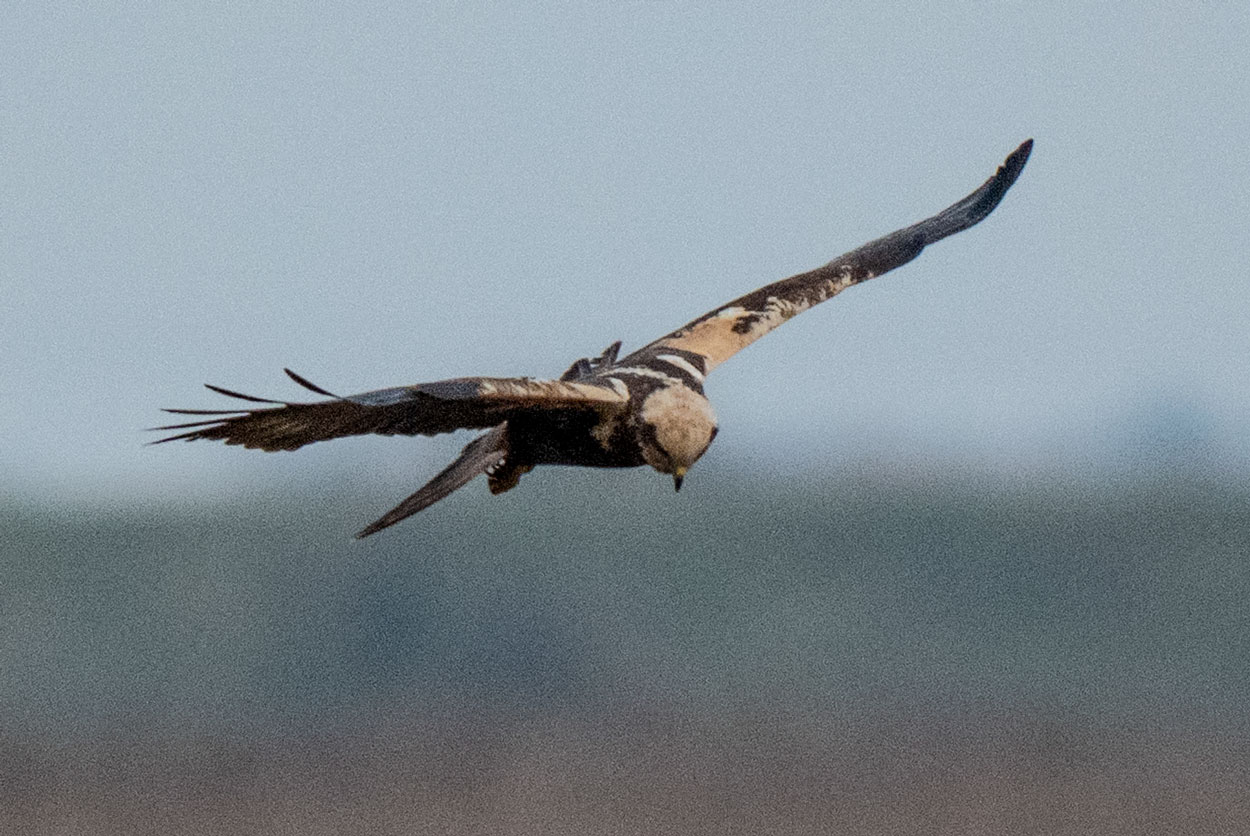 Marsh Harrier |
Waders also roost communally but not necessarily at night. They can be active by day and night as their roosting and feeding times are more likely governed by the state of the tides.
Perhaps more surprisingly raptors (birds of prey) also often roost together and sometimes these roosts consist of several different species. Marsh Harriers, Hen Harriers and the much smaller Merlin, often roost together in reedbeds.
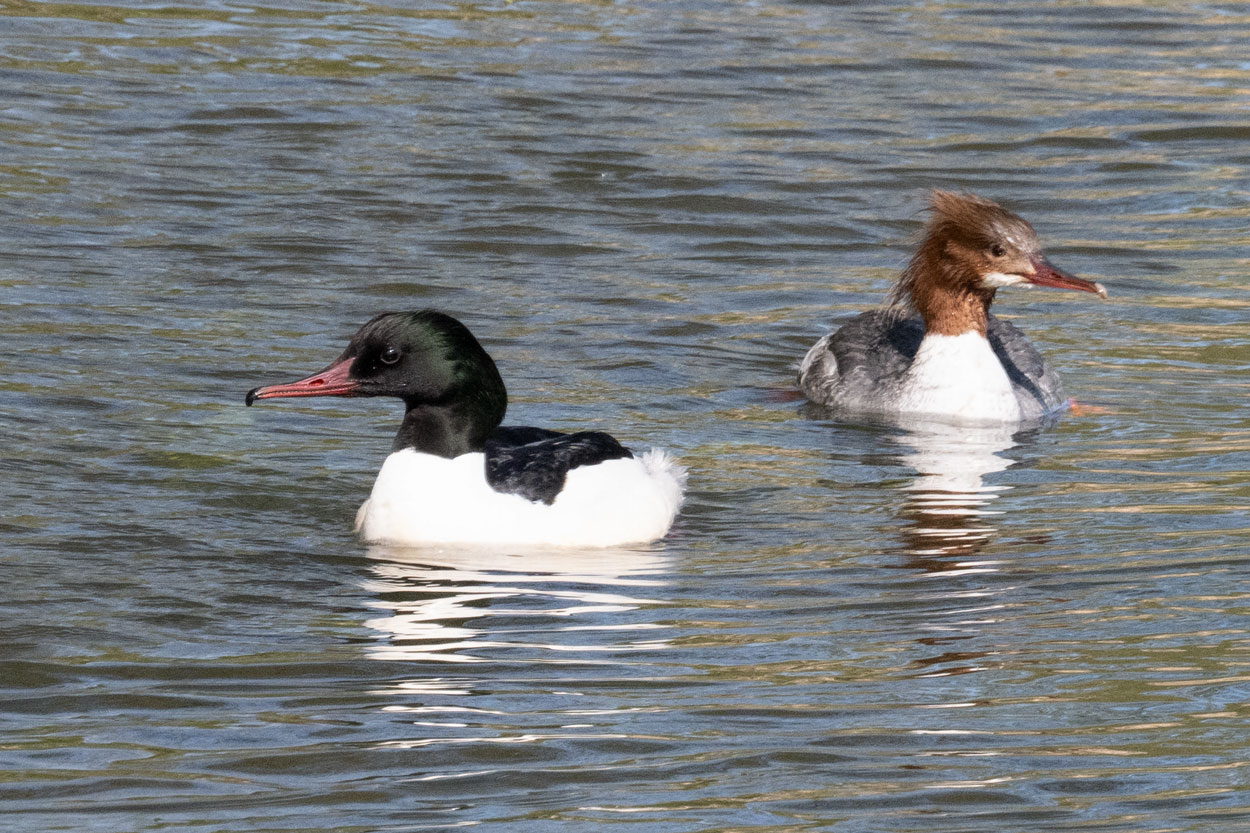 Goosander |
Wildfowl; geese, ducks and swans will roost together on open water away from the attentions of ground predators such as foxes and stoats. A nice example of this is the higher than expected numbers of Goosander, a fish eating saw-billed duck that mostly nest in hollowed trees close to mountain streams. Goosander happily winter on open water such as reservoirs, flooded gravel pits and the slow running rivers of eastern England.
Willow Tree Fen nature reserve, famous for its breeding cranes has an impressive roost of goosander usually exceeding thirty individuals.
 Crane Family |
Cranes are present at Willow Tree Fen during the winter months too. On a recent visit in January, I was pleased to see the family that nested there last spring happily feeding fairly close to the viewing area.
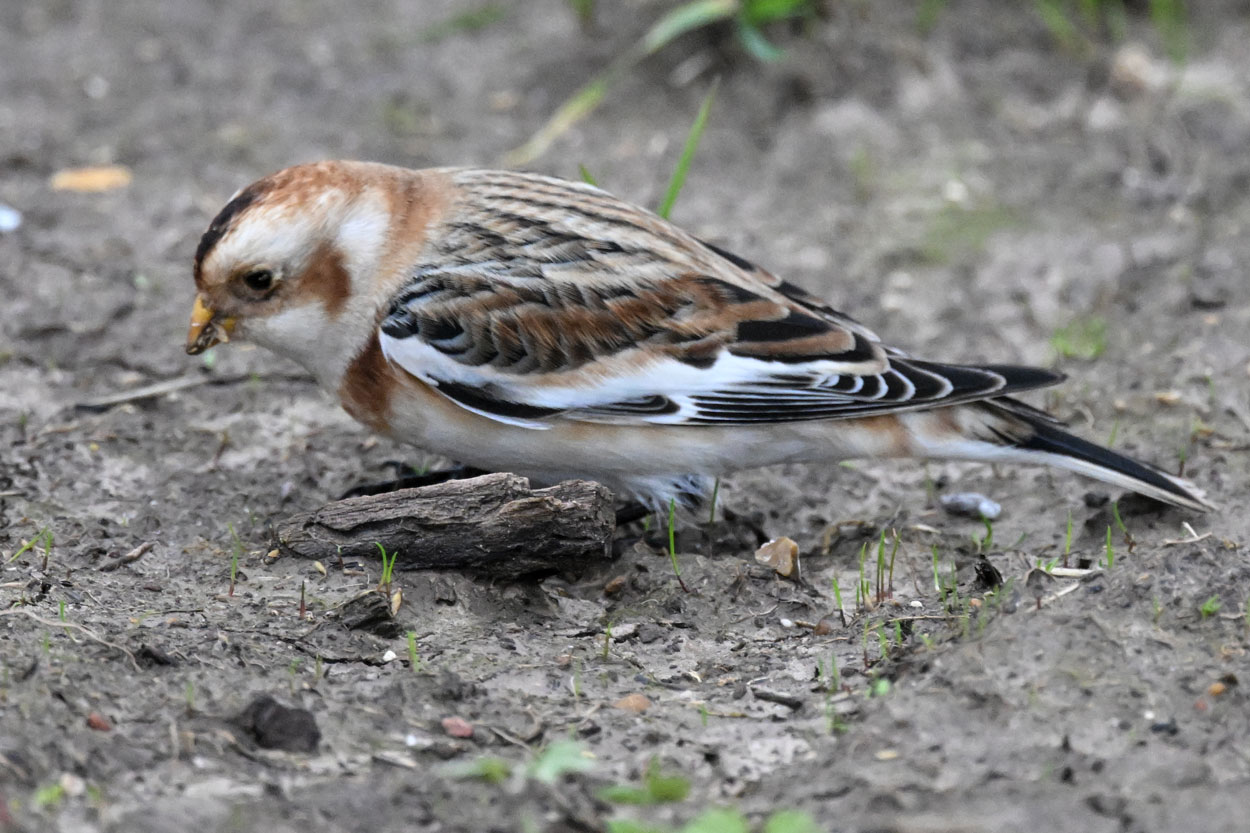 Snow Bunting |
Another delightful visitor to our coastal areas are snow buntings. These birds nest on mountains but escape the most severe winter weather to feed on beaches and sea walls around our eastern coast. The nearest breeding birds are in Scotland. The birds that nest on Cairngorm, however, appear to be sedentary, so they are not among the birds that we see on our lowland coast.
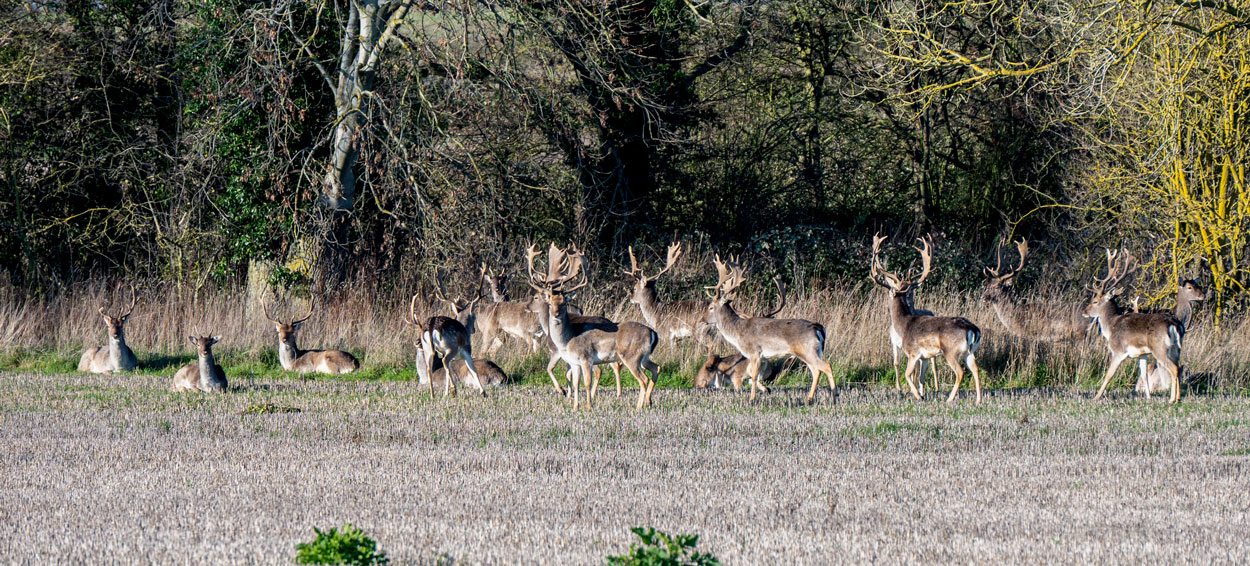 Stag Party |
As I write the first signs of spring are in the air. Snowdrops and aconites are blooming, hazel catkins sway in the breeze and some birds need little encouragement to burst into song during the finer winter days. Spring will not be on the minds of the local Fallow Deer population as their rutting season was last autumn. After the rut most of the bucks will leave the herd of does and congregate in small groups of fellow males. This is probably the origin of the term "stag party".
Ian Misselbrook
January 2026
Some text may be lost if you are viewing with a low screen resolution - click here for more info